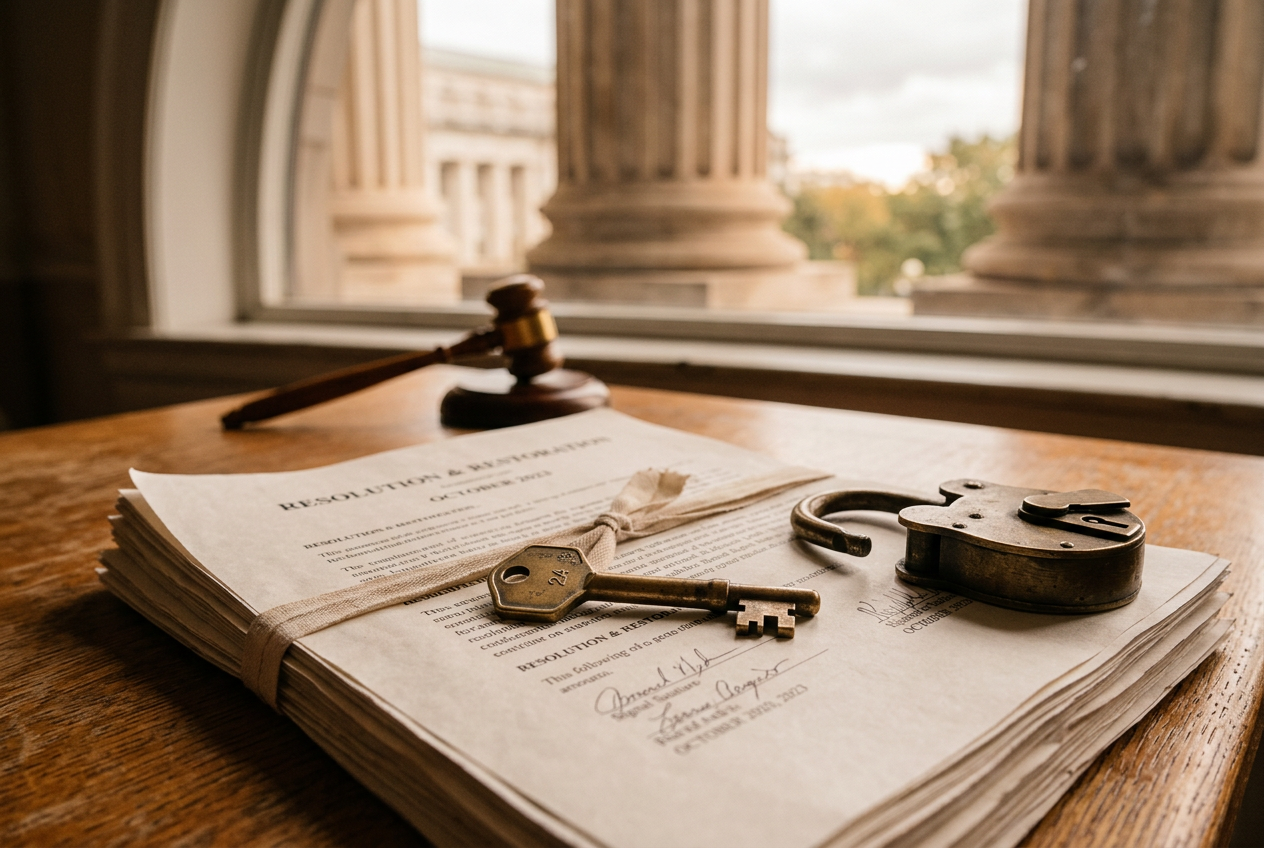

An involuntary mental health commitment can cost you your right to own a firearm. That restriction exists to protect the public, but it is not meant to be permanent. Arizona law gives people a clear path to petition for their firearm rights once they have stabilized and are no longer a danger.
How You Become a “Prohibited Possessor”
In Arizona, a person becomes a “prohibited possessor” — someone who cannot legally own or carry a firearm — when a court orders mental health treatment under A.R.S. § 36-540 after finding that the person is a danger to self or others, or has a persistent, acute, or grave disability, and that right has not since been restored.
This matters for two reasons:
- A commitment alone triggers the restriction. You do not need a criminal conviction. A civil mental health order under Title 36 is enough to make you a prohibited possessor.
- Not every commitment is based on dangerousness. Many people are committed because they were found “persistently or acutely disabled,” a standard that does not require any finding that they were dangerous at all. That distinction can be important when you ask the court to restore your rights.
Once you are a prohibited possessor, simply possessing a firearm is a criminal offense, which is why restoring the right properly, through the court, is so important.
How to Restore Firearm Rights in Arizona
Firearm rights are not restored automatically when your treatment ends. You have to ask the court for them, and the request is governed by A.R.S. § 13-925.
You file a petition with the court that entered the original order. The petition is filed by you, your attorney, or your guardian, and it must be served on the attorney for the state who handled the underlying case — often the county attorney’s office.
The court sets a hearing and weighs the evidence. At the hearing, you must present psychological or psychiatric evidence supporting your petition, and the state provides your criminal history, if any. Before granting or denying the petition, the court must consider: the circumstances that led to you becoming a prohibited possessor; your record, including your mental health and criminal history; your reputation, based on character witnesses and other character evidence; whether you remain a danger to yourself or others or still have a disability, or whether the circumstances that led to the original order still exist; and any change in your condition or circumstances relevant to the request.
You carry the burden of proof. To win, you must prove by clear and convincing evidence both that you are not likely to act in a manner dangerous to public safety and that restoring your rights is not contrary to the public interest.
If the court grants the petition, your right is restored. The court issues findings of fact and conclusions of law, and then notifies the Arizona Supreme Court and the Department of Public Safety so your record is updated in the background-check databases. At that point, it is once again legal for you to possess a firearm.
What Goes Into a Strong Petition
Because you bear the burden of proof, the petition is only as strong as the evidence behind it. In our experience, the petitions that succeed tell a clear, documented story of stability. That typically includes:
- Supportive psychological or psychiatric evidence. This is required by statute. A treating psychiatrist who can attest that your mental state is safe and stable, and who supports restoration, is often the centerpiece of the petition.
- A record of ongoing, consistent care. Continuing treatment, keeping appointments, and following a medication plan voluntarily, even after a court order has ended, all show the court genuine commitment to your health.
- Time without further crisis. No additional hospitalizations or crisis services since the original event demonstrates lasting stability.
- A clean criminal record and a track record of responsibility. Steady employment, educational achievement, and strong family and community relationships all speak to the character evidence the court is required to weigh.
- Context for the original commitment. Explaining what led to the commitment — and showing that those circumstances no longer exist — goes directly to the factors the court must consider.
Why Legal Representation Matters
Restoring firearm rights puts mental health records, court findings, and public safety all in play at once. An experienced attorney can:
- Confirm that you are eligible to petition.
- Prepare the petition and assemble the supporting evidence the statute requires.
- Secure and present the right psychological or psychiatric evidence.
- Represent you at the court hearing.
- Make sure the filing complies with both Arizona and federal law.
Key Considerations
- Timing matters. Firearm rights do not come back on their own. Nothing happens until you file a petition and the court acts, so it pays to start the process rather than wait.
- Documentation is critical. Medical records, mental health records, and clear proof of stability are what make a petition persuasive. The stronger your documentation, the stronger your case.
- This petition covers firearms only. A grant under A.R.S. § 13-925 restores your right to possess a firearm and nothing else, it has no effect on any other right or benefit. If other rights were affected by your commitment, those are separate matters.
- Legal advocacy improves your odds. Because you must meet a clear-and-convincing-evidence standard, having a lawyer who knows how to build and present the case makes a real difference.
Final Thoughts
An involuntary commitment does not strip you of your firearm rights forever. Arizona law provides a clear path to restore them once you are stable and no longer pose a threat to public safety.
If you or someone you care about wants to restore firearm rights after a mental health commitment, talk to a lawyer. The sooner you start, the sooner you can reclaim your rights and your independence.